













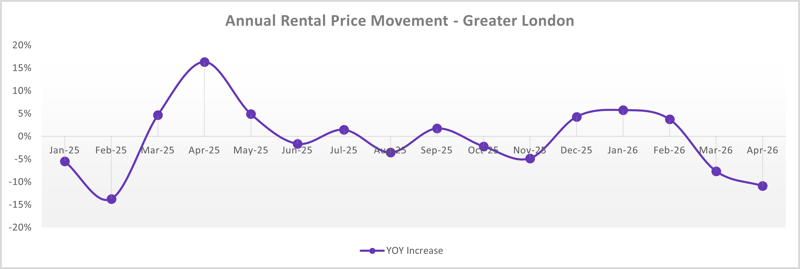
The London lettings market continued to weaken in April, with average rents down 10.9% year on year. This is a notable acceleration from March's 7.6% decline and marks the steepest annual fall we have recorded.
Demand softens further as April fails to deliver its usual lift
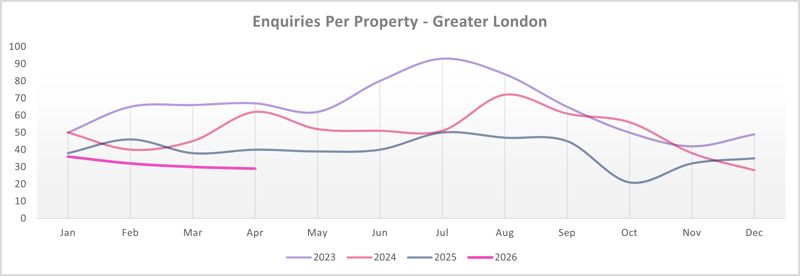
Enquiries per property fell again in April, down to 29 from 30 in March, 32 in February and 36 in January. Demand still sits comfortably above the Rightmove average of 12, but the absence of a spring lift is telling.
April is historically one of the stronger months for tenant activity. In 2023 we saw 67 enquiries per property in April, in 2024 we saw 62, and even in 2025 we recorded 40. To see April come in at 29 this year is a clear break from the seasonal pattern and reinforces the broader cooling we have been tracking since the start of the year.
Affordability is doing the heavy lifting
There is now little doubt that affordability is the dominant factor in the London market. Tenant budgets have been stretched for some time, and with rents now falling at close to 11% year on year, landlords are having to price more realistically to secure good tenants quickly.
This is consistent with what we are seeing on the ground. Properties that come to market priced in line with current demand are still letting well, often within days. Properties priced against last year's levels are sitting longer and ultimately reducing.
The wider national picture
The trends we are seeing in London sit within a broader national rebalancing. Zoopla's most recent UK Rental Market Index, covering March, pointed to weakening demand, improving supply and a clear slowdown in rental growth, with lower migration and a stronger first time buyer market cited as key drivers.
What our April data suggests is that this rebalancing is happening more sharply at the new let end of the London market, where rents had run furthest ahead of affordability. London is, in effect, leading the correction rather than lagging it.
The Renters' Rights Act is shaping landlord sentiment
The introduction of the Renters' Rights Act on May 1st is also clearly weighing on landlord decision making. We are seeing more landlords actively reviewing their options, including a small uptick in those considering selling. It is too early to call a definitive shift, but the conversations we are having with landlords have changed noticeably in the last month.
For those looking for practical guidance on what the new rules mean in day to day terms, you can find our full Renters' Rights resources, including our recent webinar with Suzanne Smith of The Independent Landlord, here.
What this means for landlords
The combination of softer demand, falling rents and a major regulatory change all landing at once makes this a pivotal moment for landlords. Three things matter more than ever:
Pricing realistically. The cost of overpricing in this market is no longer a few extra days on the market. It is a meaningful loss of rental income, often more than the saving a landlord thought they were locking in.
Choosing the right tenant. With the Renters' Rights Act removing Section 21 and reshaping how landlords manage tenancies, getting the right tenant in at the start of the tenancy matters more than ever. Thorough referencing, fraud checks and a proper inventory are no longer optional.
Keeping costs under control. Margins are tighter than they have been for years. Landlords paying high street agency fees, renewal fees or marked up maintenance charges are seeing those costs eat directly into a shrinking yield.
In Case You Missed It
A few other pieces from the Hello Neighbour blog this month that landlords may find useful. I enjoyed the piece on what really goes wrong in rental properties, which draws on our experience managing thousands of London homes to highlight the issues landlords most often run into and how to avoid them:
COMMENT