








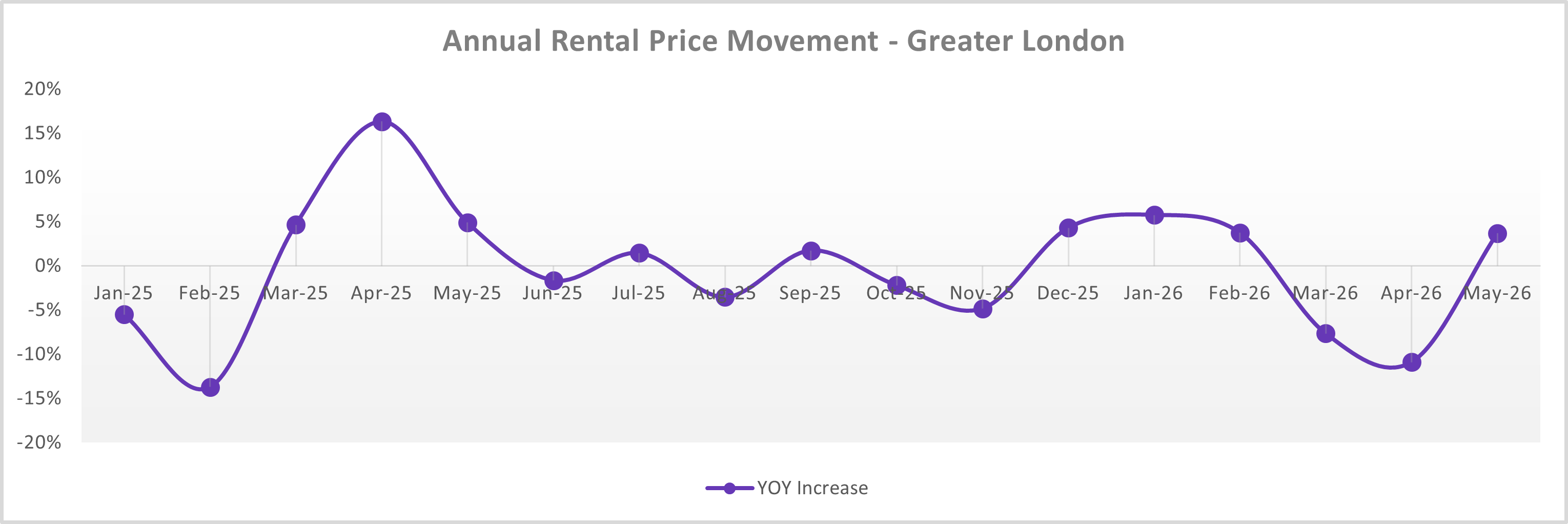
The London lettings market steadied in May, with average rents up 3.7% year on year. This is a clear shift from the sharp falls of recent months, with rents down 7.6% in March and 10.9% in April, and it suggests the market may be finding a more stable footing as we move into the summer.
Demand finally delivers its spring lift
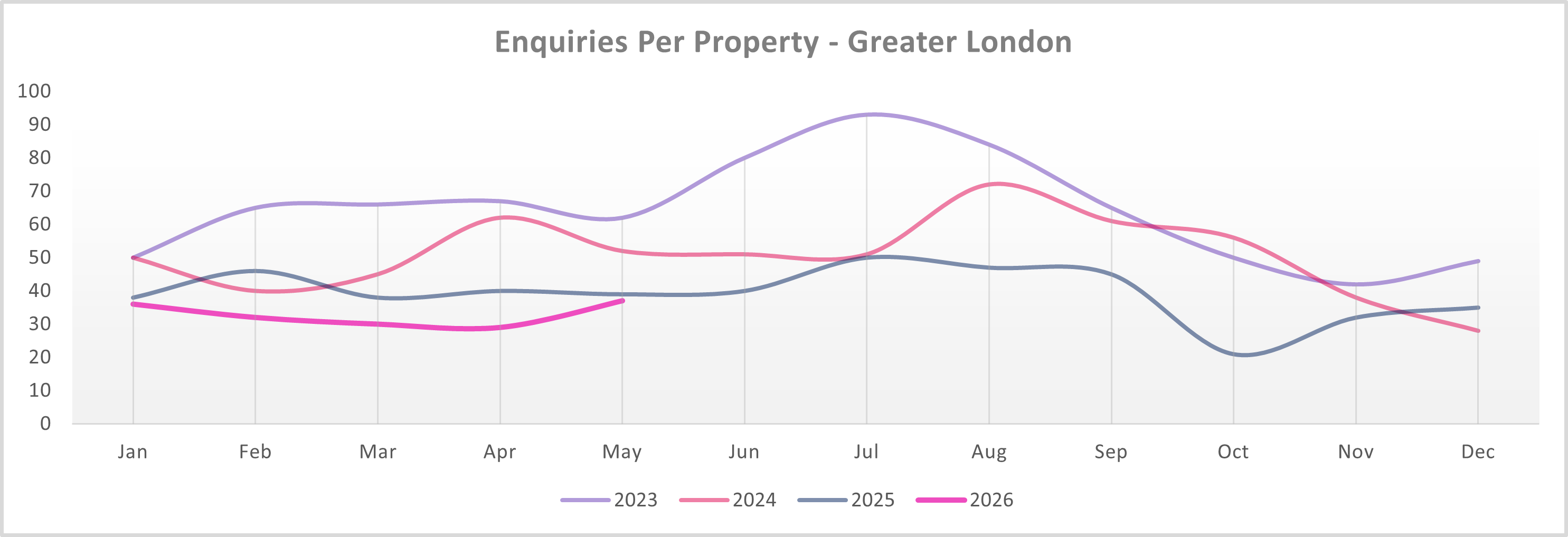
Enquiries per property rose to 37 in May, up from 29 in April and the highest level we have recorded so far in 2026. This is a meaningful turnaround. For most of this year, demand has tracked below historical norms and the usual spring pick-up failed to materialise in April. May has changed that.
For the first time in 2026, demand is close to matching prior years. We recorded 39 enquiries per property in May 2025 and 52 in May 2024, so the gap is narrowing. Demand also remains comfortably above the Rightmove average of 12. After a slow start to the year, the spring bounce has arrived, if a little later than usual.
A new factor in the data: the Renters' Rights Act
The Renters' Rights Act came into force on 1st May, and it changes how we should read the rental figures going forward. One of its most significant provisions for the lettings market is that landlords can no longer accept offers above the advertised asking price. Properties must now be let at the rent they are listed at.
This has a subtle but important effect on the data. Under the old rules, a property could be listed at one figure and let for more once competing tenants bid the price up. That uplift did not always show in the advertised price. With that route now closed, there is a clear incentive for landlords to list at a higher price from the outset to capture the level the market will bear.
If this happens at scale, it could push up advertised rents and, in turn, inflate the year-on-year percentage figures in the months ahead, without necessarily reflecting a real increase in what tenants were previously paying. It is too early to say whether this is already a factor in May's numbers, but it is something we will be watching closely as the new rules bed in.
Affordability remains the underlying story
Beneath the month-to-month movement, affordability continues to be the dominant force in the London market. Rents ran well ahead of tenant budgets over the previous two to three years, and the correction we have seen since the start of 2026 reflects a market adjusting back toward what tenants can realistically pay.
What we see on the ground supports this. Properties priced in line with current demand are still letting quickly, often within days. Those priced against last year's levels sit longer and usually end up reducing. May's modest rise does not change that fundamental dynamic. Realistic pricing remains the single biggest factor in letting a property well.
The wider national picture
The trends in London continue to sit within a broader national rebalancing. Recent industry data has pointed to softening demand, improving supply and a clear slowdown in rental growth across the UK, with lower migration and a stronger first-time buyer market cited as key drivers.
London has, in effect, been leading this correction rather than lagging it, with the sharpest adjustments showing at the new let end of the market where rents had run furthest ahead of affordability. May's steadier reading may be an early sign that the most acute phase of that correction is behind us, though one month does not make a trend.
What this means for landlords
A steadier market, recovering demand and a major regulatory change all arriving together make this an important moment for landlords. Three things matter more than ever.
Price realistically. Even with demand recovering, the cost of overpricing is significant. A property that sits on the market loses income every week it stands empty, and that loss usually outweighs any premium a landlord hoped to achieve. With the new asking-price rules in force, getting the listed figure right from day one is more important than it has ever been.
Choose the right tenant. The Renters' Rights Act removes Section 21 and reshapes how landlords manage tenancies, which makes getting the right tenant in at the start far more important. Thorough referencing, fraud checks and a professional inventory are no longer optional extras. They are the foundation of a secure tenancy.
Keep costs under control. Margins remain tight. Landlords paying high street agency fees, renewal fees or marked-up maintenance charges are seeing those costs eat directly into their yield. Reviewing what you pay to let and manage your property is one of the most effective ways to protect your return in the current market.
Our outlook for the rest of 2026
Our view has not changed materially. We expect rents to remain broadly flat for the rest of the year, with month-to-month variation reflecting seasonal patterns rather than any sustained upward trend. Demand should continue to recover through the summer in line with previous years, though likely remaining below the levels seen in 2023 and 2024. The one variable to watch is how the new asking-price rules influence advertised rents over the coming months.
If you want to understand what all of this means for your specific property, our team is here to help you price accurately, find the right tenant and stay compliant with the new rules.
In Case You Missed It
A few other pieces from the Hello Neighbour blog this month that landlords may find useful. Offer negotiation has changed significantly since 1st May, so the insights from over 7,000 offers we have received make for some great reading:
COMMENT