

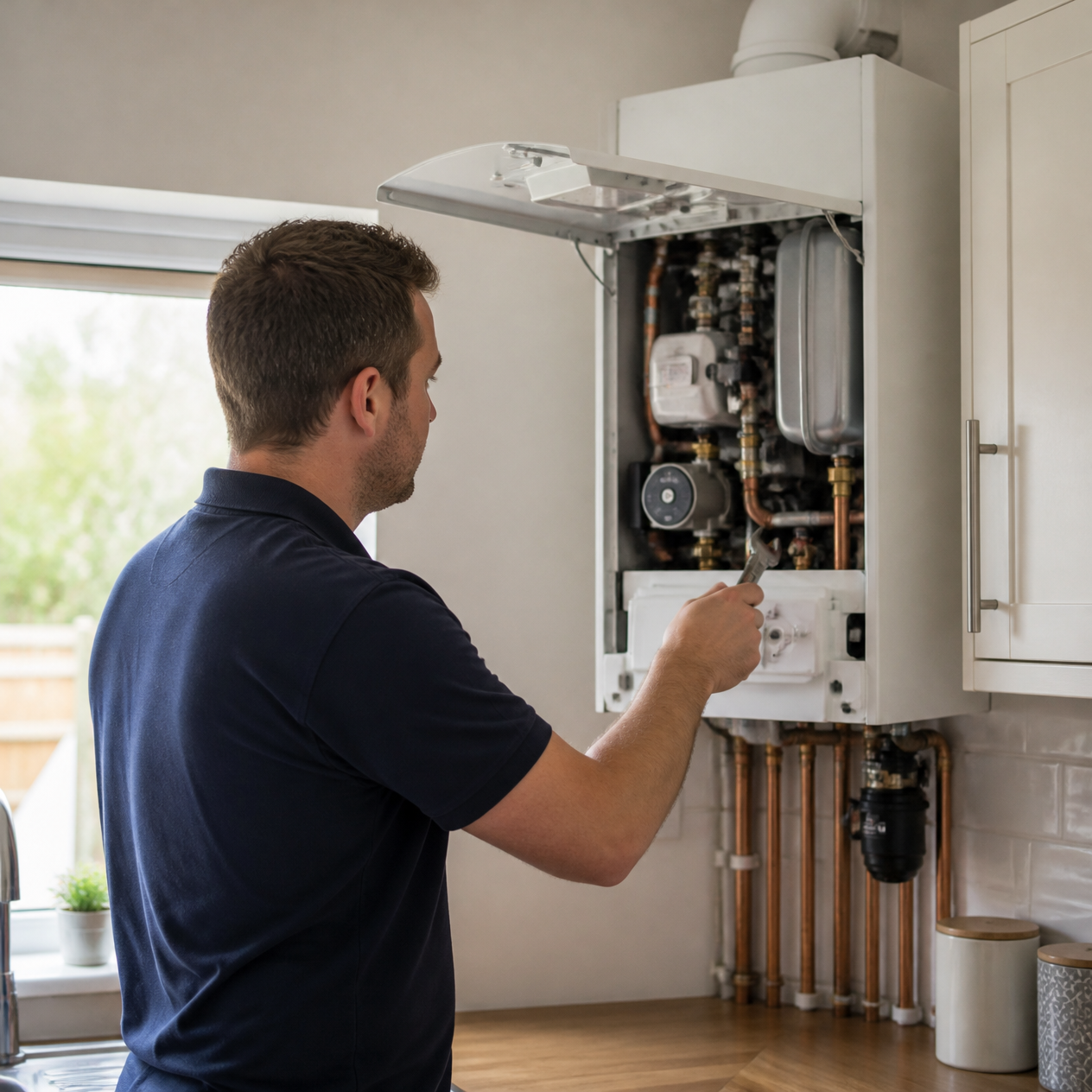
In short: the landlord pays for the structure, the exterior and the installations that supply water, gas, electricity, heating and sanitation. The tenant pays for what they damage and for anything they brought with them. Neither side can sign that away.
Updated 27 October 2026
This is part of What have landlords ever done for us? The 2026 data, our analysis of what the private rented sector actually delivers, drawn from the English Housing Survey, HMRC and Ministry of Justice figures.
The key facts
- Section 11 cannot be contracted out of. Section 12 of the Landlord and Tenant Act 1985 makes void any clause trying to shift those duties onto the tenant.
- Installations, not appliances. Section 11 covers the systems that supply water, gas, electricity, heating and sanitation. A cooker or washing machine is a separate question.
- Notice usually starts the clock. For most disrepair inside the property, the landlord becomes liable once they know about it. Reporting it matters.
- Fair wear and tear is not damage. A deposit deduction has to reflect the tenant's use beyond normal, and cannot leave the landlord better off than before.
- 2035. The reformed Decent Homes Standard applies to the private rented sector from 2035, confirmed in January 2026.
In this article:
- What must a landlord repair by law?
- Can a tenancy agreement move repairs onto the tenant?
- What is the tenant responsible for?
- Who pays when an appliance breaks?
- Does a landlord have to fix something before being told?
- What if the damage is the tenant's fault?
- What counts as fair wear and tear?
- What does all this add up to?
- What is changing next?
What must a landlord repair by law?
Section 11 of the Landlord and Tenant Act 1985 sets the floor, and it applies automatically to almost every private tenancy of under seven years. It covers three things.
The structure and exterior, which means the roof, the walls, the foundations, the drains, the guttering, external pipes, the windows and the external doors. The installations supplying water, gas, electricity and sanitation, which includes the basins, sinks, baths and toilets themselves. And the installations for space heating and water heating, which is the boiler and the radiators.
Section 9A sits alongside it and goes further. Inserted by the Homes (Fitness for Human Habitation) Act 2018, it requires the property to be fit to live in at the start of the tenancy and to stay that way throughout. The practical difference is that section 11 is about repairing something that has broken, while section 9A can require a landlord to improve something that was never adequate in the first place.
Two things sit outside both unless the agreement says otherwise: the garden, and anything in a shared building that is not part of the property or the parts the tenant is entitled to use.
Can a tenancy agreement move repairs onto the tenant?
No. Section 12 of the same Act makes void any clause that tries to exclude or limit the section 11 duties, and section 9A carries the same protection. A tenancy agreement can give the tenant more than the statute does. It cannot give them less.
This catches out landlords who have inherited an old agreement or downloaded a template. A clause making the tenant responsible for the boiler does not work. It is not merely unenforceable in a dispute, it has no effect at all, and the landlord remains liable as though it were not there.
Charging the tenant for a section 11 repair runs into a second problem, because a fee of that kind is likely to be prohibited under the Tenant Fees Act. Recovering the cost of damage the tenant caused is different, and covered below.
What is the tenant responsible for?
Three categories, and they are narrower than most tenancy agreements imply.
First, using the property in a tenant-like manner. That is an old common law duty and it means the small things a reasonable occupier does: unblocking a sink, replacing light bulbs and smoke alarm batteries, turning off the water if going away in winter, keeping the place reasonably ventilated and not letting the garden become a wilderness.
Second, anything they brought with them. If the tenant owns the washing machine, repairing it is their problem.
Third, damage they or their visitors cause, whether deliberately or carelessly. A cracked basin from a dropped bottle is the tenant's. A cracked basin from the pipe behind it failing is the landlord's.
There is a fourth that is often forgotten and matters more than the others. Reporting problems promptly is the tenant's responsibility, and a small leak left unreported for six months becomes an expensive repair that need not have been.
Who pays when an appliance breaks?
This is where a lot of published advice is simply wrong, so precision matters.
The duty runs to the installations for water, gas, electricity, sanitation and heating. It does not reach appliances that merely make use of those supplies. The boiler is an installation. The cooker, the fridge, the washing machine and the dishwasher are appliances, and section 11 does not require a landlord to repair or replace them.
That does not end the matter. If the landlord supplied the appliance as part of the let, the obligation usually arises from the tenancy agreement itself, and a broken cooker in a property let as furnished can also make the property unfit under section 9A or create a hazard the council can act on. An inventory listing a cooker is, in practice, a commitment to keep it working.
The sensible position for a landlord is to say plainly in the agreement which appliances are included and who maintains them, rather than leaving it to be argued about later.
Does a landlord have to fix something before being told?
For most disrepair inside the property, no. The landlord's section 11 liability generally begins once they have notice of the defect, which can be actual notice from the tenant or constructive notice from something they ought reasonably to have known.
Two qualifications matter. Notice is not required for disrepair in parts of the building the landlord retains control of, such as a roof or a communal area. And once the landlord does know, the repair must happen within a reasonable time, which the law deliberately does not define. What is reasonable for a dripping tap is not what is reasonable for no heating in January.
For both sides, this makes the written record the thing that decides disputes. A tenant who reports by text and a landlord who confirms in writing are both better protected than one relying on a phone call.
What if the damage is the tenant's fault?
The landlord still has to carry out the repair where it falls within section 11 or section 9A. What changes is who ultimately pays.
The usual route is a deduction from the deposit at the end of the tenancy, which has to be evidenced. That means a check-in inventory with dated photographs, a check-out report comparing against it, and a quote or invoice for the work. Deposit schemes adjudicate on evidence, and a claim without a check-in inventory very often fails, however obvious the damage looks.
Two limits are worth knowing. A deduction must not leave the landlord better off than before, so replacing a six-year-old carpet gets a contribution towards a new one, not the full cost. And the deduction must relate to the tenant's use beyond fair wear and tear, which is the next question.
What counts as fair wear and tear?
Deterioration that happens through ordinary use over the length of the tenancy, with nothing careless about it. Carpet thinning in a hallway, paint dulling, a door handle loosening, minor scuffs on a wall.
What takes something out of the category is the tenant doing more than ordinary living. A burn, a tear, a stain that will not come out, a hole drilled for a shelf, a pet scratching a door.
Three factors decide most arguments: how long the tenancy ran, how many people lived there, and how old the item was at check-in. The same worn carpet is fair wear and tear after four years with a family and something else entirely after six months with one person.
The honest summary is that this is a judgement call rather than a rule, which is why the inventory does the work. Our guide to what really goes wrong in a rental property covers the problems that generate most of these disputes.
What does all this add up to?
£6.41 billion a year across the sector. HMRC's Property Rental Income Statistics, published on 28 August 2026, show 1.92 million unincorporated landlords declaring repairs and maintenance against rental income in 2024-25, making it the most commonly declared expense of any category. That averages £3,339 per landlord, or roughly one pound in every ten collected in rent.
The real total is higher, because HMRC excludes capital improvements by definition. A new kitchen, an extension and most energy efficiency work are not in that figure at all.
What the tenant gets for it is the point of the arrangement. A tenant whose boiler fails makes a phone call. The owner finds several thousand pounds. The tenant's exposure to the physical condition of the building is capped at nothing, and that is the transfer of risk section 11 exists to guarantee. Our analysis of what landlord costs now take out of every pound of rent sets out where the rest of the money goes.
What is changing next?
Three things, on dates you can plan around.
The reformed Decent Homes Standard applies to the private rented sector from 2035, confirmed by government in January 2026. It goes beyond repair into a reasonable state of repair across key building components, reasonably modern facilities and thermal comfort.
Awaab's Law, which sets fixed statutory timeframes for investigating and repairing damp, mould and emergency hazards, currently binds social landlords only. MHCLG opened its consultation on extending it to private rented tenancies on 9 October 2026, and it closes on 18 December 2026, with regulations and a commencement date to follow. We have set out what that will mean, and why damp is so hard to fix, in full.
And EPC C by 1 October 2030, which is confirmed government policy for England and Wales within a £10,000 cost cap, though it still needs primary powers and an amending statutory instrument expected during 2027. Our guide to EPC rules for landlords sets out what the standard involves.
Taken together these shift the direction of travel from repairing what breaks towards maintaining a standard, on a timetable that is now mostly fixed.
Sources
- Landlord and Tenant Act 1985, sections 9A, 11 and 12. Section 9A was inserted by the Homes (Fitness for Human Habitation) Act 2018 and came into force on 20 March 2019.
- Shelter Legal England, Repairs under section 11. Scope of the duty, the notice requirement and the limits on charging tenants.
- Shelter Legal England, Fitness for habitation in rented homes. Section 9A, what counts as unfit and the exceptions.
- Extending Awaab's Law to private rented tenancies and to licences, MHCLG consultation, opened 9 October 2026, closes 18 December 2026.
- MHCLG policy statement of 28 January 2026 confirming the reformed Decent Homes Standard from 2035, and the Minimum Energy Efficiency Standards government response of 21 January 2026.
This article is general guidance, not legal advice, and reflects the law in force in England at the time of writing. Scotland, Wales and Northern Ireland have their own regimes.
Download the full report: What have landlords ever done for us? The 2026 data. Twenty pages covering repairs, deposits, condition and eviction, with every figure sourced.
Hello Neighbour gives landlords the tools to let and manage a property properly without a high street agent's fee. See how fixed-fee management works.
You might also find these useful
COMMENT